
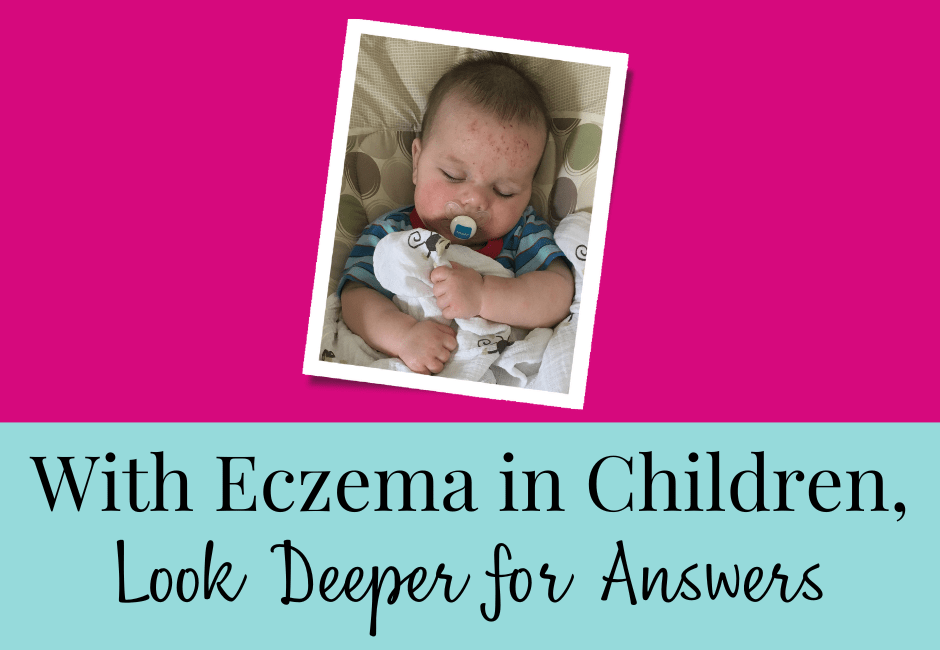
When it comes to eczema in children, it’s important to look deeper than using steroid creams. Did you know that food allergies and eczema often go hand-in-hand? I found that to be true in my oldest child, and I’m embarrassed to say how long it took us to figure it out, though glad we did.
Disclaimer: I am not a medical professional and this post does not offer medical advice. I am recounting our journey to find answers as to what was causing my son’s eczema and what worked for us.
Painful Eczema on my Baby
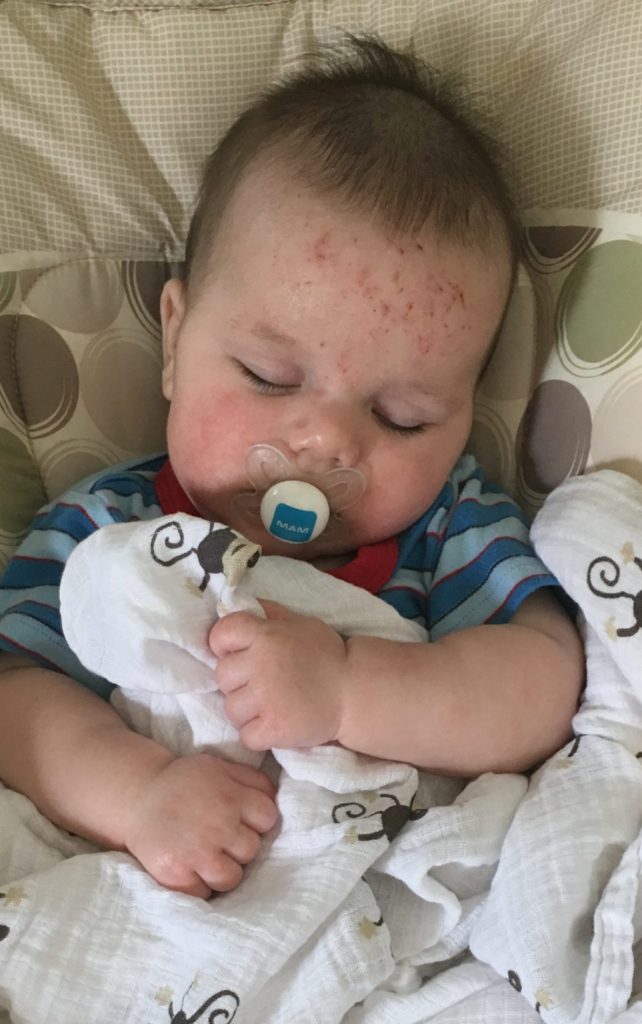
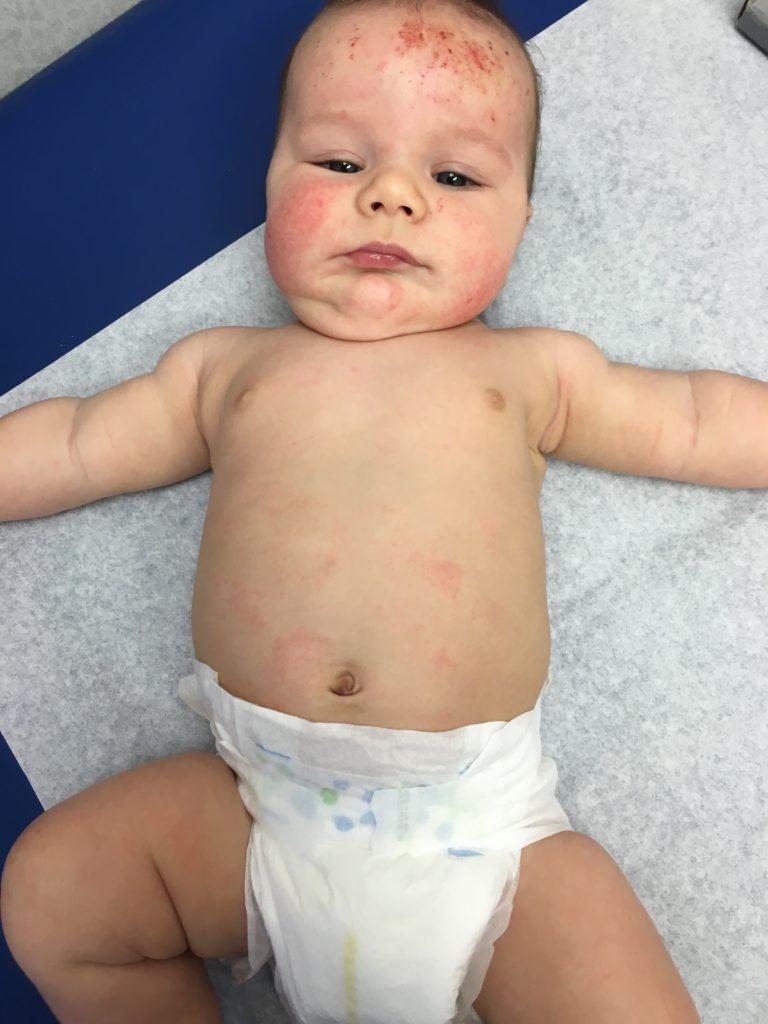
My oldest child had such bad eczema when he was a baby that he’d scratch himself until he bled. It was so sad to see, and I felt so helpless. The pediatrician we went to at the time told us it was normal and not to worry about it. Knowing what I know about food sensitivities and allergies from my own experience, I knew that there was something deeper.
At first, though, I was in denial.
Maybe I was just too busy being a new mom and going back to work full-time.
For the first year of life, we slathered him with hydrocortisone/steroid creams, especially on his face and ankles, where the itching was the worst. We would focus on the skin creases and itchy rash areas with the baby eczema cream and steroid creams, and would even try to keep our cat away from him in case he had a reaction to pet dander.
At the time, he was in daycare, and they called often, saying he had to go home because he had a rash. Even after getting a doctor’s note saying he has severe eczema and isn’t contagious, this happened repeatedly, which was so frustrating.
Looking back at photos, I realize that his eczema got significantly worse once he started daycare, after being home with me for the first couple of months. He must have scratched his forehead all day from the look of these photos. He was also a horrible sleeper; maybe part of it was due to being itchy, and the other issues from undiagnosed food sensitivities.
Digging Deeper
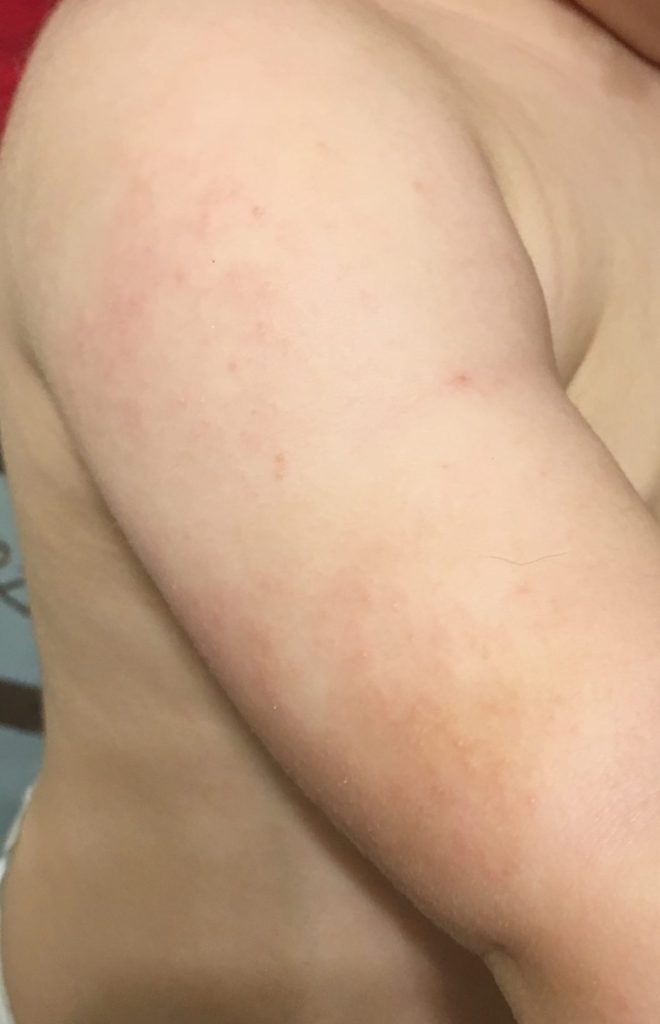
I became a stay-at-home mom when my oldest was a year old. His eczema improved somewhat after being removed from the daycare environment. They used a lot of bleach and other chemicals to clean, which I think hurt his little immune system. Though the eczema was no longer as severe or on his face once he was home with me, he still had quite a bit on his arms and legs. Though he didn’t scratch at it, it was clear something was wrong inside and it was more than just sensitive skin or typical eczema.
Now that I wasn’t working and all of my focus was on him at the moment, I was able to research what to do, and a new doctor for him to see.
When he was 19 months old, we took him to a new pediatrician who looked at the root cause, not just the symptoms. The new pediatrician had him undergo food allergy and food sensitivity testing via a blood test. I was relieved he didn’t have to do the whole needle pricks on the back process I went through as a teen.
(Note: I’m glad I did this when I did…we found out I was pregnant with high-risk identical twins just two months later, which changed our focus in life a bit.)
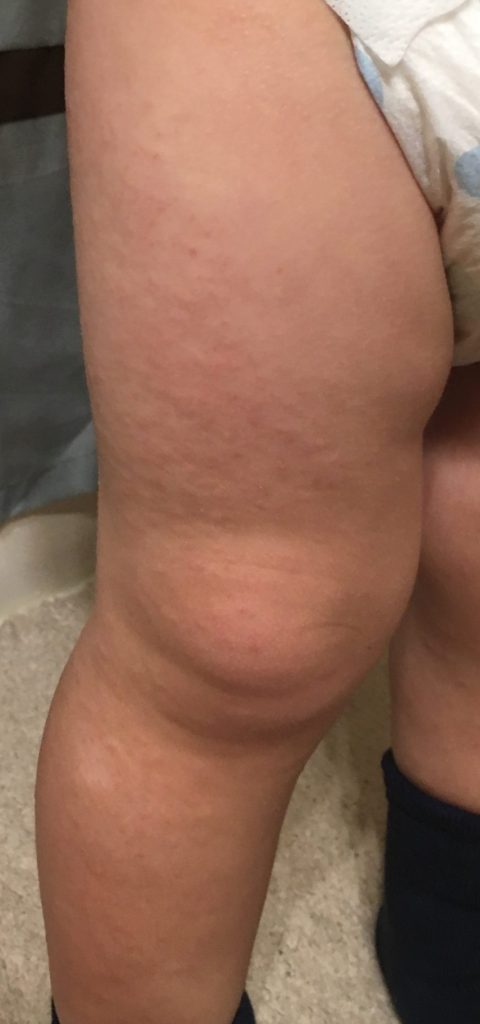
Food Allergy Testing Results
The food allergy testing found he is mildly allergic to eggs and sensitive to gluten and dairy.
The doctor’s suggestion was for us to remove those items from his diet for 3 months, then reassess. Since I also have issues with gluten and dairy, we decided to keep these foods out of his diet. Luckily, in a sense, we were already well-versed at avoiding cross-contamination with gluten since my husband still ate it at the time (years later, the whole household had to go gluten-free as even our best efforts of avoiding cross-contamination weren’t good enough).
Our son’s eczema quickly resolved once those foods were removed from his diet. It was amazing to see the transformation. We did have him try egg a year later, but eczema crept back, so we removed it again.
I’m so glad that we looked deeper into what was causing his eczema instead of just continuing to slather him with creams as the original doctor suggested. The creams weren’t good to use long-term, especially the hydrocortisone/steroid creams, and I knew there had to be a deeper reason for eczema.
Always trust your gut and find a doctor who listens to you, and don’t be afraid to switch doctors if necessary.
We aren’t the only family that has been told by their pediatrician that severe eczema is ‘normal’. At least in our case, it surely wasn’t, and he clearly wasn’t going to grow out of it by the time he was 2-years-old like his original doctor said. I’m so glad that we looked deeper. His clear
Food Allergy Blog Posts
Years later, we had him tested for food sensitivities again through YorkLabs, which we were able to do on our own. We found he has some additional sensitivities to peanut, cashew, and soy. See the blog post below for more information on how easy it was to do.
The reason we tested him later wasn’t due to eczema, that’s been gone for years since we removed the initial foods, but he was having some GI and ADHD/behavioral issues that turned out to be partially due to new food sensitivities. Once we removed those foods and worked on healing his gut with supplements, he’s been great ever since!

Looking for more Food Allergy resources? I’ve written more blog posts about having kids with food allergies, which are linked below.


Resources
– Information on Eczema from the National Eczema Foundation
– Information on Treating Eczema from the Inside Out by Dr. Amy Myers
– Food Allergies in Children with Eczema from the National Eczema Foundation

As a mom of identical twins and a son two years older, I have gained invaluable experience in the realm, and chaos, of parenting. With a Master's Degree and Education Specialist Degree in School Psychology, I spent years as a school psychologist, helping children navigate through their educational and emotional challenges. Now as a stay at home mom and professional blogger, I combine my areas of expertise to help you in your parenting journey.